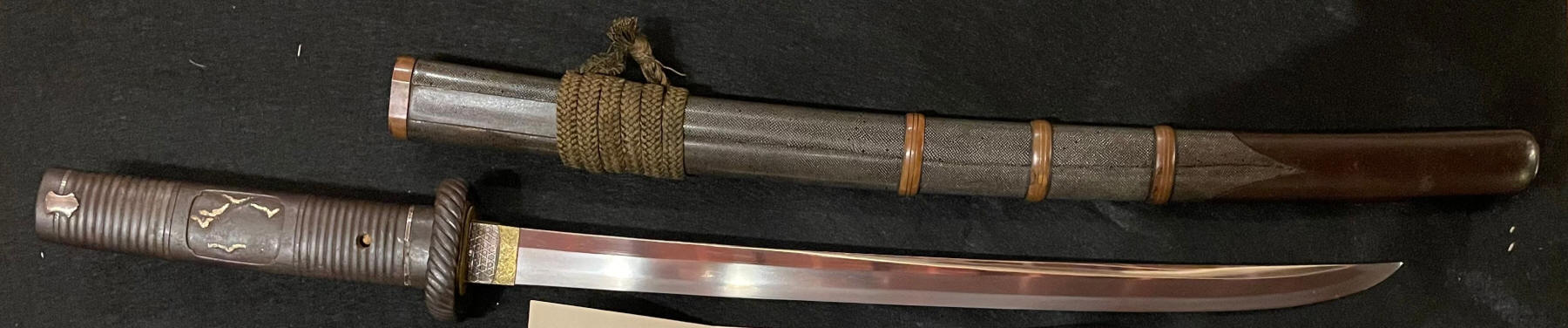


Kaifu Naginatanaoshi Wakizashi
KK542
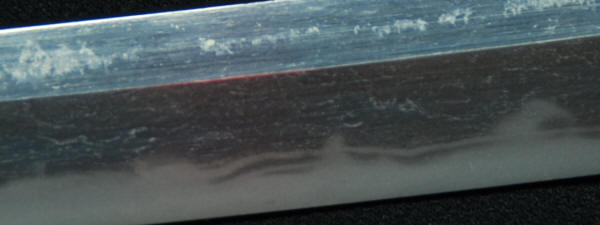
An interestingly mounted mounted naginatanaoshi wakizashi, shinogizukure, iroi mune. Hawatare: 1 shaku 3 sun 8 bu (41.817 cm / 16.46"). Motohaba: 2.5 m. Kasane: 6 mm. Chu suguba in konie deki, narrow even habuchi. The boshi is yakizume. Tight even jigane. A couple of spotas of stain, as shown. The one in the hamon pictures looks far worse than it is. NBTHK Hozon kanteisho.
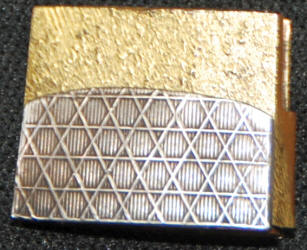
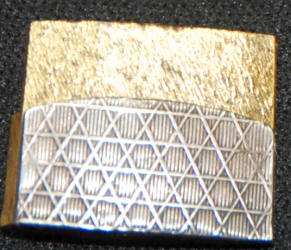
Mounted with plain iron fuchi-kashira, likely just part of an iron tsuka which is carved to resemble parallel cord wrap, with large Jakushi style plates with gold and silver nunome in place of menuki. As per Robert Haynes, when shown the tsuka, "I have no idea. I have never seen anything like it". The iron Shonai tsuba circa 1700 (as per Robert Haynes), (6.4 cm x 6 cm.) has a wide mimi (1.1 cm.) with diagonal cord design on the outside in keeping with the design of the tsuka. The saya is fine polished and lacquered shark skin, with copper band and a large iron kojiri. An excellent gold and silver two piece habaki, with fine vertical lines underneath an open diagonal crosshatch pattern
My first impression was Yamato-den, likely Mihara, and I hoped early. Since Kaifu worked in Yamato-den during the 14th century, I am comfortable with this attribution, which dates it as late Kamakura though Nambokucho.
KAIFU: The Kaifu sword group was a school of swordsmiths based in Awa province, the present day Tokushima on the island of Shikoku. They flourished from the Kamakura jidai to the end of the Edo jidai. The Kaifu district that served as a line of defense from the neighboring Tosa province. They are frequently classified as wakimono (not of the gokaden), and considered fascinating though often under rated.
Their swords were highly valued for their exceptional cutting ability and practicality. They were particularly popular with the Awa naval forces, and often associated with Japanese pirates operating around Shikoku.
Early koto blades resembled those of Yamato-den, or Soshu traditions, later and more common examples are in the style of katakiriba. The design has a bevel on one side of the blade, similar tohoco (kitchen knife) and sometimes had a serrated mune for cutting ropes.
The legendary founder was Ujiyoshi , and many smith names start with either Uji os or Yasu in their names, such as Ujiyoshi or Yasuyoshi.
During the Edo period, they served the Hachisuka family that ruled the Tokushima domain.
$3,750


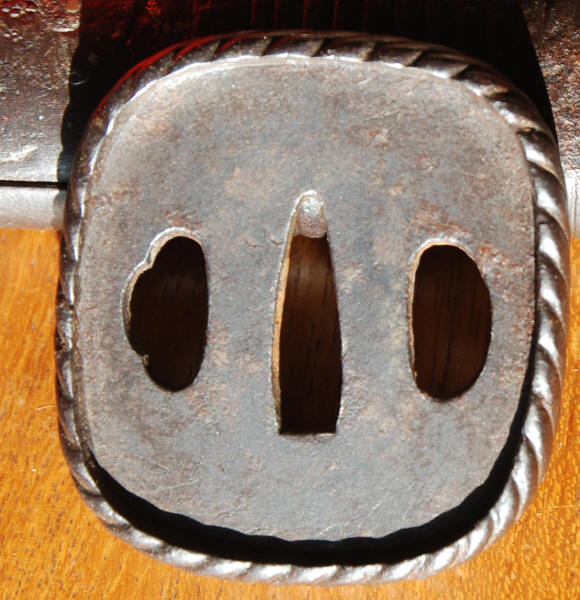
Shonai Tsuba 6.4 cm x 6 cm.
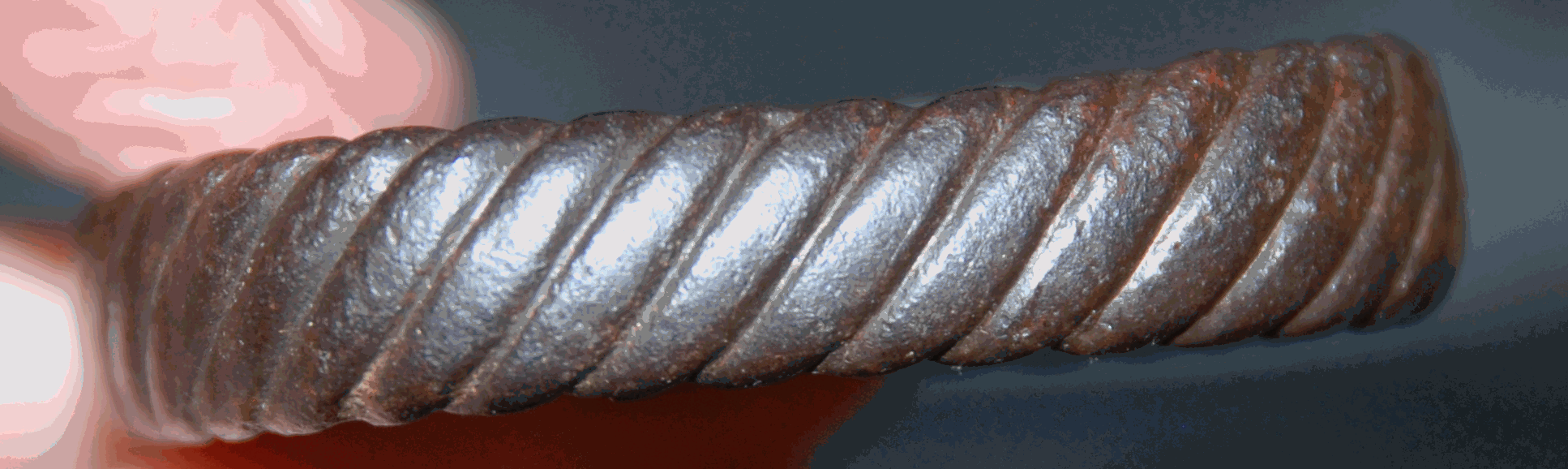
1.1 cm

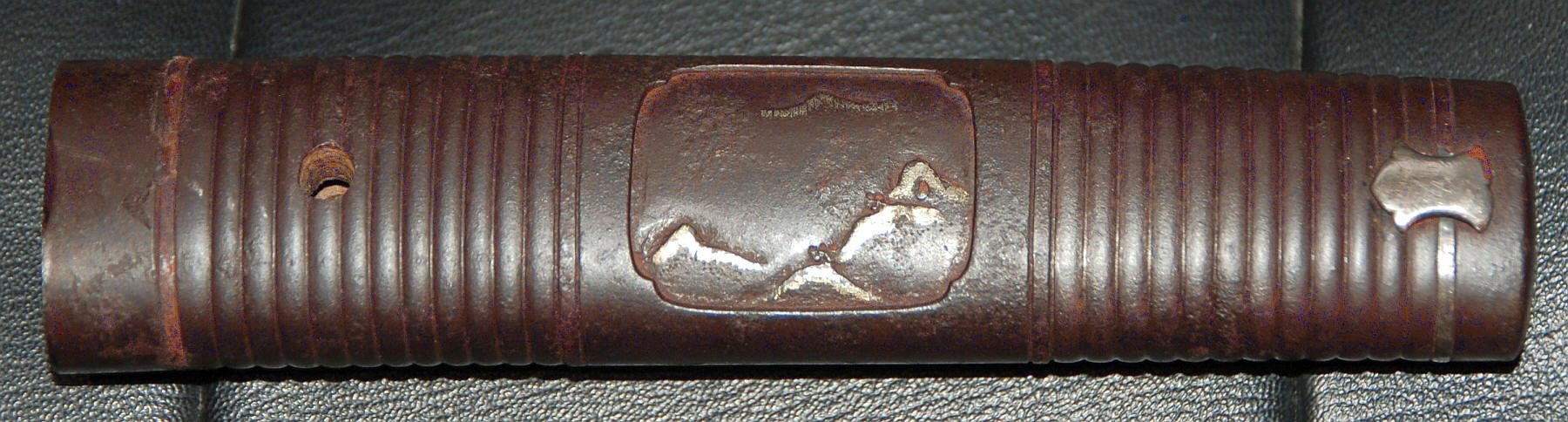
Jakushi Style Panels in an Iron Tsuka
As per Robert Haynes, "I have no idea. I have never seen anything likeit".
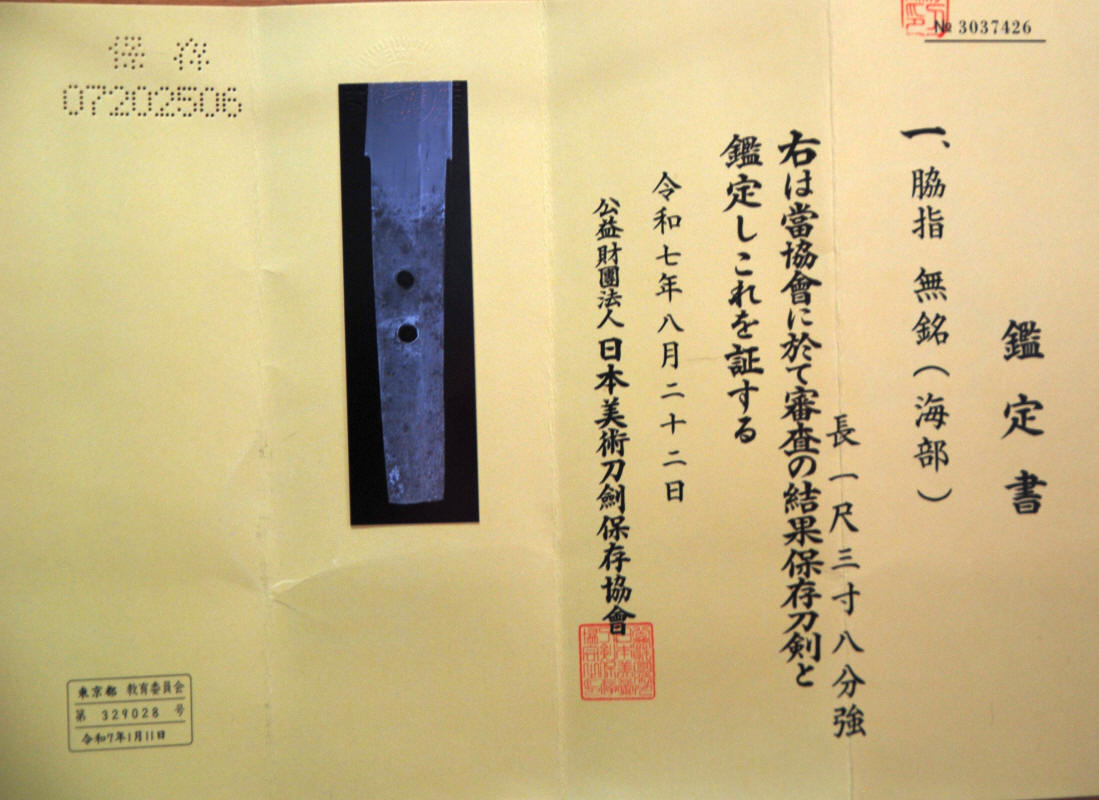
NBTHK Hozon